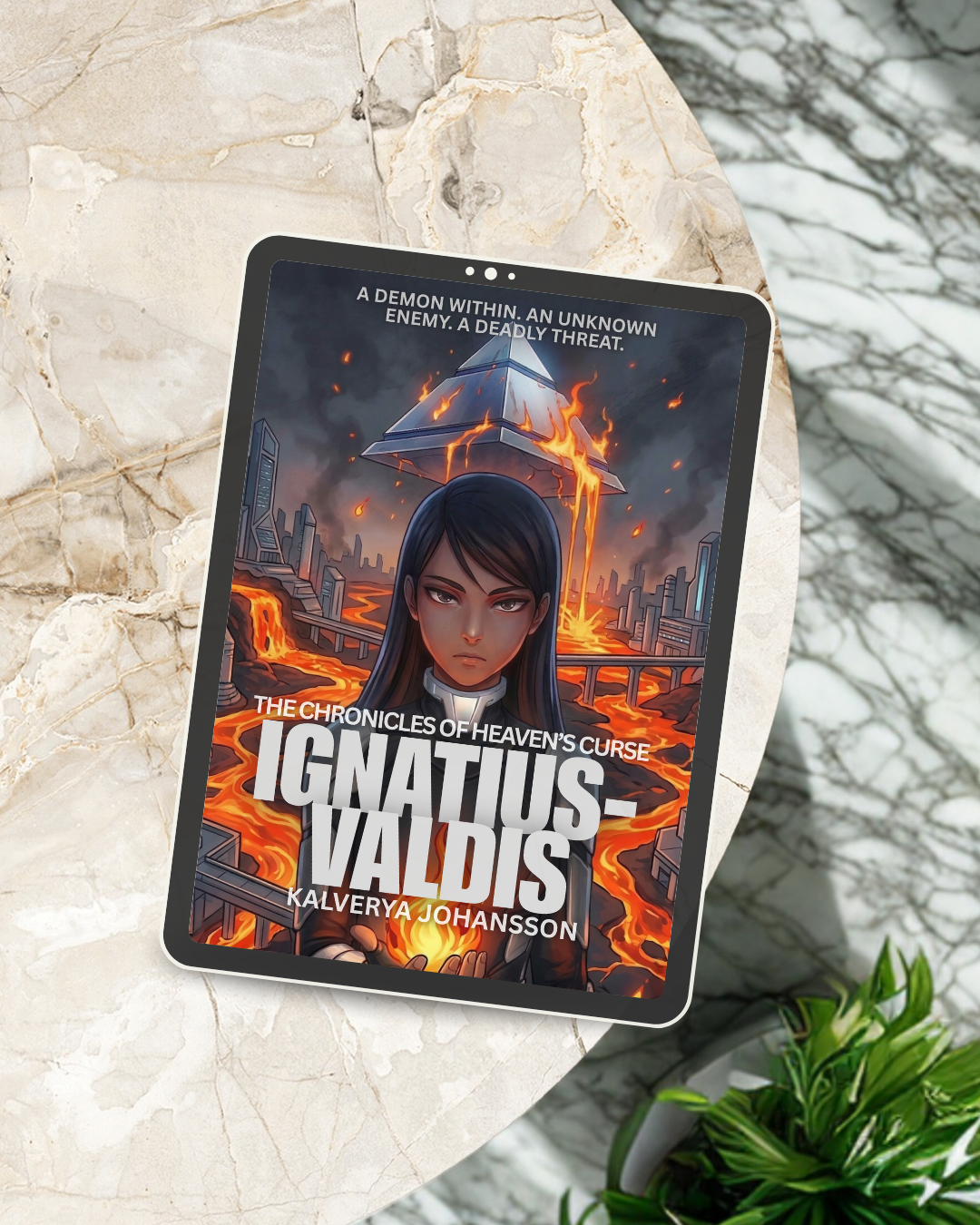
Knowing how I created science fiction in Ignatius-Valdis wasn't always easy. At first glance the ingredients were obvious—space, tech, altered humans, superhumans—but turning those elements into something that felt both fresh and true to the world I’d built required more than thematic checkboxes. I had to interrogate each trope, ask why it mattered here, and decide whether to subvert it, lean into it, or let it dissolve into something entirely different.
The Science-Fiction themes and sub-genres were already present, like tectonic plates under a city. Space opera neon rubbed shoulders with posthuman ethics, and cosmic-scale mystery whispered through the ruins of once-ambitious habitats. My job was to find the seams where these influences overlapped and pry them open. That meant deciding which conventions would guide readers and which would surprise them—because familiarity is the hook, but surprise is the thing that makes a world linger.
Audience considerations shaped nearly every decision. I wasn’t writing for a single monolith called “sci-fi readers”; I had to picture the specific people I wanted to pull in—those who loved tight hard-SF logic, those who favored character-driven moral dilemmas, and those who craved big speculative ideas. Balancing those desires meant calibrating pacing, technical detail, and emotional depth so that the novel felt neither dryly academic nor melodramatically pulpy.
Hooking the audience early demanded a clear and intriguing premise, but also an immediate sense of stakes tied to the characters’ interior lives. I learned to craft openings that seeded mystery and revealed character simultaneously: a minor choice, the flicker of a hidden ability, or a bureaucratic regulation with teeth. The hook had to promise both action-packed plot propulsion and thematic resonance so readers would invest beyond the novelty.
Stylistic choices were not incidental; they determined how readers experienced the world. A clipped, clinical voice emphasized systems and technology, while a more lyrical tone allowed for existential wonder. I matched style to subject: when the story needed to foreground the mechanics of superhuman abilities, clarity and economy won; when it needed to dwell on the psychological fallout of those abilities, I let sentences breathe and observations sharpen.
To plug the right themes into the story I mapped them against Ignatius-Valdis itself. Sovereignty and autonomy played differently in a society where bodies could be modified; surveillance took on ethical contours when cognition could be shared. Those thematic anchors guided plot turns and character arcs so the narrative felt cohesive rather than a patchwork of speculative set pieces. The themes became lenses through which every action and consequence gained weight.
Creating realistic characters meant treating their extraordinary attributes as extensions of real human needs and flaws. Superhumans and metahumans in Ignatius-Valdis and the Chronicles of Heaven's Curse think, love, fear, and bargain just like anyone else; their powers complicate those drives but don’t abolish them. I strove to craft motivations that were understandable and often painfully ordinary, so readers could see themselves in the choices—even when those choices unlocked destructive capacities or impossible compassion.
Designing science-fiction systems that were transparent and easy to follow was one of the hardest tasks. I wanted rules that felt inevitable within the world, but I also needed them to be communicated without info-dumps or confusing technobabble. That meant revealing mechanics through character decisions, failures, and consequences, so readers could learn the system organically as the stakes escalated. When done well, transparency amplifies suspense; when done poorly, it breaks trust.
I didn’t always find the right path on the first try. Sometimes I knew the feeling I wanted to evoke but not the mechanism to achieve it, or I drifted into familiar clichés because they were safe. Yet those failures taught me precision: to pare back what didn’t serve the core story, to obsess over how each scene advanced theme or character, and to keep readers tethered until the last page.
The aim was a unique take on power and conflict—superhumans and invisible wars that reflect the everyday battles everyone faces—and when the pieces aligned, the world of Ignatius-Valdis stopped feeling like invention and started feeling inevitable.
