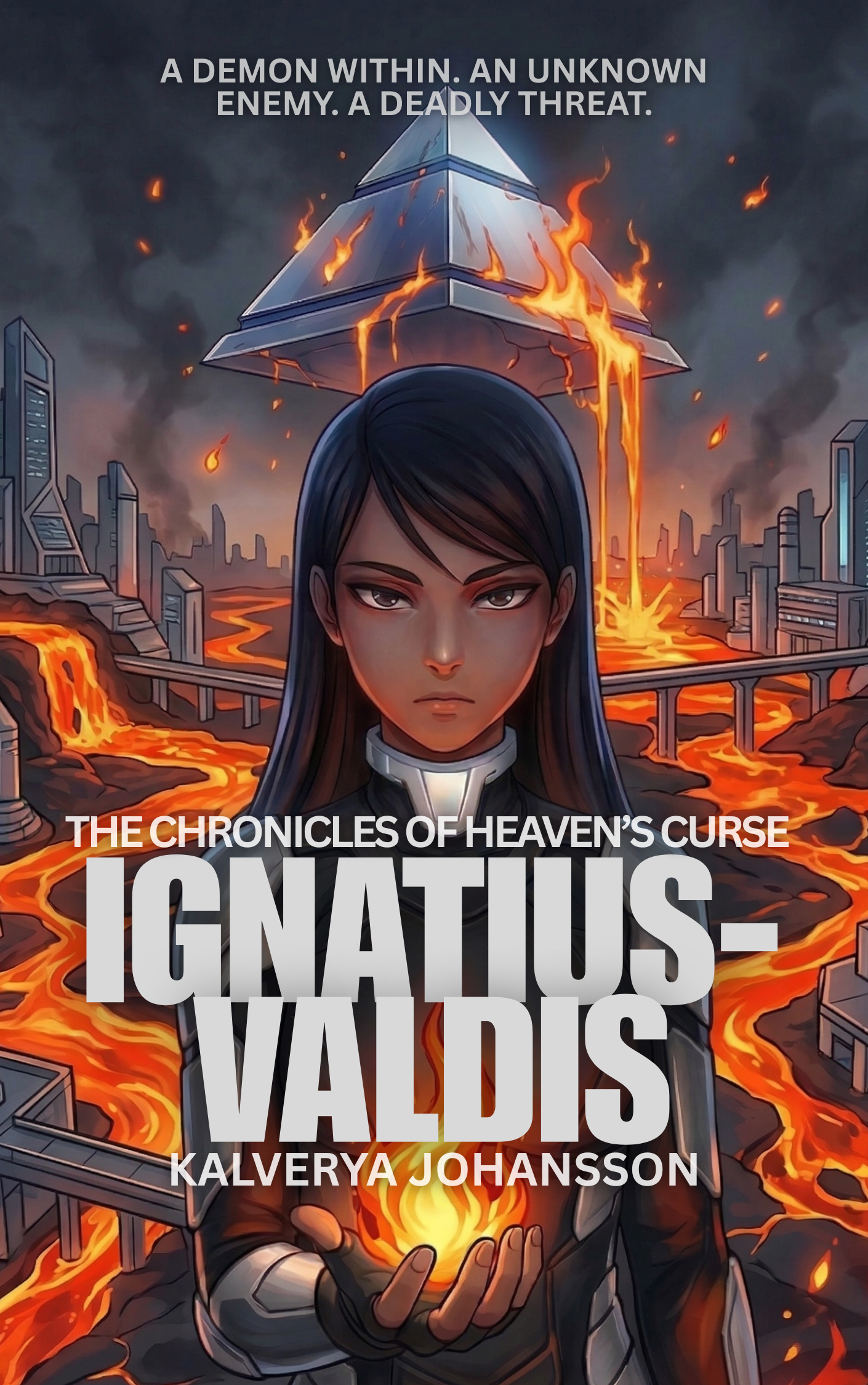

Knowing I wanted to tell a story was one thing; knowing I could was another. The story I longed to tell—the Chronicles of Heaven's Curse—was clear in my mind, and my goal was to capture readers and hold their attention from beginning to end. When the time came to write, I leaned into action, adventure, and science fiction with touches of the supernatural, though I resisted blending every genre at once. I rewrote Midnight Eclipse repeatedly until its core felt true, and I did the same with Ignatius-Valdis, refining the prose until the narrative flowed cinematically and read smoothly.
Each rewrite demanded that I sharpen the story until every scene hummed with purpose, stripping away indulgence and amplifying momentum so the sci-fi action-adventure core hit with precision; with each revised edition I tightened pacing, intensified stakes, and layered in complementary subgenres—hard science detail to ground the technology, noir beats to deepen moral ambiguity, and a touch of space opera to expand scale—so that the narrative not only delivered kinetic set pieces but also resonated emotionally and thematically, ultimately crafting a tale that felt both relentlessly thrilling and richly textured.
It wasn't easy to write the hard sci-fi action to detail, as I had to make sure the real-world science matched the sci-fi magic system: every propulsion burst, energy shield, and neural interface needed plausible mechanisms so the stakes felt real; I cross-checked equations, consulted papers on plasma dynamics and quantum error correction, and mapped out how exotic technologies would obey conservation laws while still allowing dramatic twists. Balancing technical rigor with narrative momentum meant trimming jargon where it slowed the scene and leaning on sensory specifics—hiss of cooling fins, the minute lag in synaptic relay—to convey complexity without drowning the reader. The result was a scaffolding of believable constraints that both grounded the characters’ choices and made the moments of unpredictability more striking, because when the science bent, it did so within rules the reader could trust.
As I wrote the story of Ignatius-Valdis I had to make sure the foundation of the Chronicles of Heaven's Curse book series was firm and held the constructs of the fictional civilization together; every myth, law, and architectural detail needed to interlock so the world would bear scrutiny, from the brittle hierarchies of the sky-temples to the clandestine rites whispered in subterranean guildhalls. I mapped histories that explained present conflicts, seeded believable economies and resource pressures that shaped politics, and defined technologies and magic with clear rules so consequences felt earned rather than arbitrary. Characters’ beliefs and dialects grew out of that scaffold—peoples shaped by climate, religion, and trade routes—so their choices would ring true within the system I created. The result was a living backdrop where plot could move naturally: when a temple collapsed or an oath was broken, readers would sense the weight of longstanding causes and the plausible ripples those events would send through a tightly constructed civilization.
As I wrote Midnight Eclipse, I made it essential that every character carried a deep, distinct backstory that explained not just who they were but why they chose the paths they did; those histories shaped their fears, loyalties, and blind spots, so when they moved across the battleground their choices felt inevitable rather than convenient. I mapped out formative events, relationships, and private contradictions for each figure, testing scenarios against those foundations until their reactions—whether impulsive bravery, cautious calculation, or bitter self-preservation—read as the most plausible outcome of their lived experiences. By anchoring conflict in psychological truth, the narrative’s tension stayed grounded: betrayals, sacrifices, and sudden alliances emerged organically from character, not plot demands, and the reader could trace each decision back to an honest, believable interior logic.
Each revision of the first story peeled back layers of uncertainty and padding, revealing a core that wanted to be sharper and truer; dialogue was pared until each line carried intention, scenes were reordered to honor cause and consequence, and the protagonist’s flaws were coaxed into honest motivations—resulting in a world where small details (a scar, a recurring weather pattern, a habit of lying to oneself) suddenly carried narrative weight and made the character’s choices feel inevitable rather than manufactured.
In the second tale, revisions tightened the social web around the characters, clarifying how relationships strained and shifted under pressure; side characters were given clearer needs that intersected with the main arc, settings acquired rules that shaped behavior, and the thematic threads of forgiveness and sacrifice were woven more consistently through plot beats so that emotional payoffs resonated with earned subtlety.
The third draft focused on internal architecture: scenes were changed to reveal rather than tell inner change, chapter breaks were repositioned to amplify turning points, and contradictions in motive were left standing long enough to create believable tension; as a result, the character’s growth felt messy and human, the world reacted in ways that reinforced stakes, and the themes of identity and belonging gained precision without losing complexity.
For the fourth story, repeated edits enriched sensory detail and cultural context, transforming broad archetypes into individuals with distinct histories and vernacular; the protagonist’s arc was anchored by specific, repeatable behaviors that tracked their development, while the setting’s rules—economic, political, personal—made choices logical and the thematic questions about power and redemption more urgent and immediate.
By the fifth and subsequent passes, the narrative voice had settled into a rhythm that matched the characters’ emotional cadences: scenes flowed with purpose, redundancies were erased, and subplots were trimmed to highlight the central conflict; the result was a polished story world where characters felt like people you might recognize, relevance to contemporary concerns was sharpened, and the overarching themes threaded through every action, making the entire book cohere.
The latest editions and revised versions of the Chronicles of Heaven's Curse have clearly shifted the series’ trajectory, carrying increased weight and influence over how the story will unfold in its final form. These editions refine character arcs, tighten thematic focus, and resolve earlier inconsistencies, creating a stronger, more coherent foundation for future installments. By reworking worldbuilding details and recalibrating pacing, the revisions make subsequent plot developments more credible and emotionally resonant. As the series moves from drafts toward its finalized release, these updated volumes serve not merely as corrections but as authoritative guides that inform narrative decisions, continuity, and reader expectations. Their influence ensures that the concluding chapters will be executed on firmer creative ground, offering a more unified vision and a more powerful payoff for long-time readers and new audiences alike.
